' d='M0 0h21v15H0z'/%3E%3Cpath fill='url(%23b)' d='M-.002 0h21v15h-21z'/%3E%3Cpath d='M5.003 10H-.002V5h5.005L-2.082.22l1.118-1.657 8.962 6.045V-1h5v5.608l8.962-6.045L23.078.22 15.993 5h5.005v5h-5.005l7.085 4.78-1.118 1.657-8.962-6.045V16h-5v-5.608l-8.962 6.045-1.118-1.658L5.003 10z' fill='url(%23a)'/%3E%3Cpath d='M14.136 4.958l9.5-6.25a.25.25 0 00-.275-.417l-9.5 6.25a.25.25 0 10.275.417zm.732 5.522l8.515 5.74a.25.25 0 10.28-.415l-8.516-5.74a.25.25 0 00-.279.415zM6.142 4.526L-2.74-1.461a.25.25 0 00-.28.415L5.863 4.94a.25.25 0 00.279-.414zm.685 5.469l-9.845 6.53a.25.25 0 10.276.416l9.846-6.529a.25.25 0 00-.277-.417z' fill='%23DB1F35' fill-rule='nonzero'/%3E%3Cpath fill='url(%23c)' d='M-.002 9h9v6h3V9h9V6h-9V0h-3v6h-9z'/%3E%3C/g%3E%3C/svg%3E)
' d='M0 0h21v15H0z'/%3E%3Cpath fill='url(%23b)' d='M10 0h11v15H10z'/%3E%3Cpath fill='url(%23c)' d='M0 0h7v15H0z'/%3E%3Cpath fill='url(%23a)' d='M7 0h7v15H7z'/%3E%3C/g%3E%3C/svg%3E)
anthropologist, Author & meditation practitioner
Lisa Feder
About Lisa
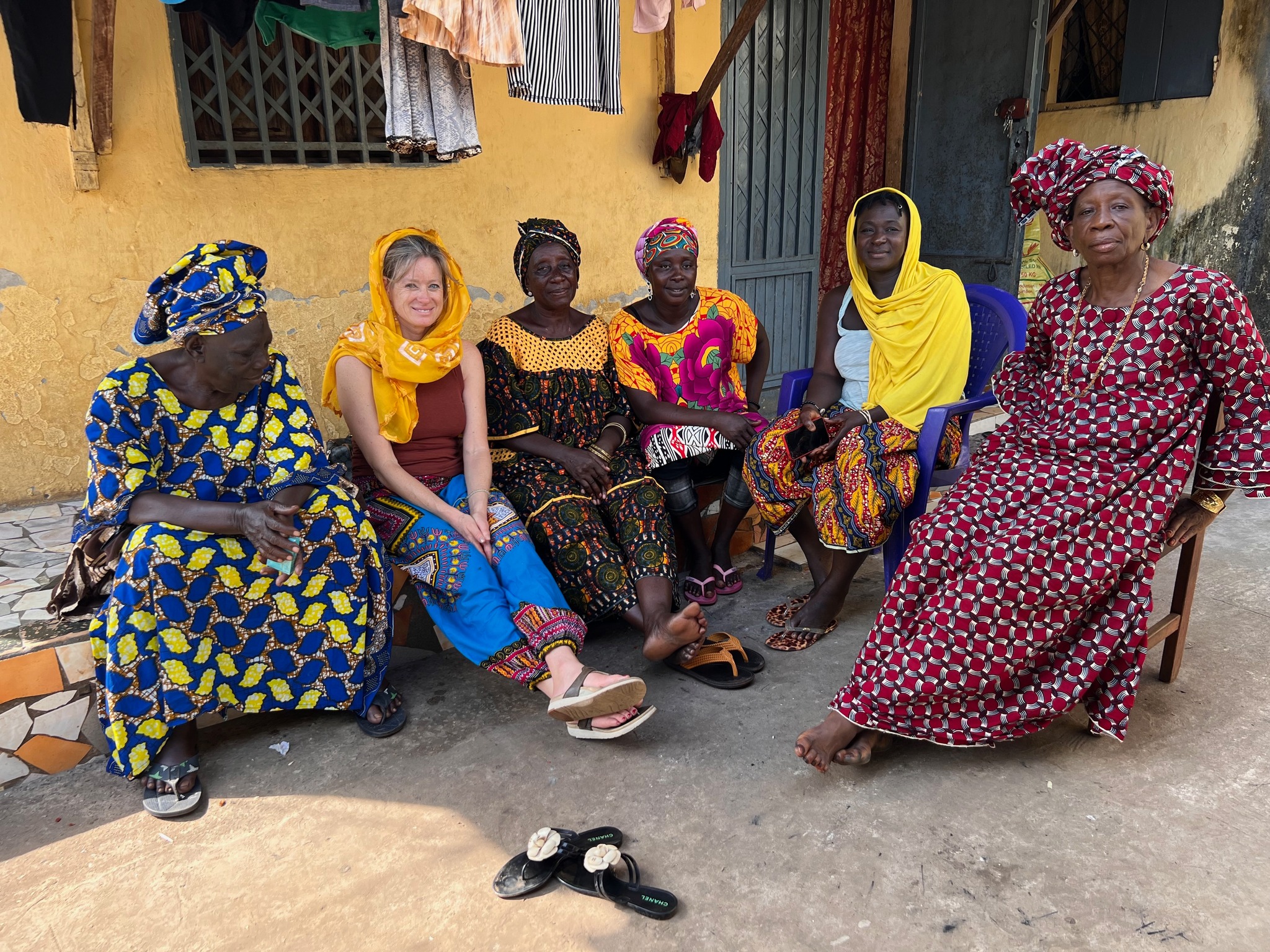
Born in New York and based in France since 2015, she has lived and learned across Brazil, Costa Rica, Israel, and West Africa, studying how different societies create meaning and transmit wisdom. Lisa earned her PhD in Cultural Anthropology from Cornell University, her MA from the University of Chicago, and her BA from Lafayette College. She trained with the late Doug “Qapel” Duncan and continues her studies and karma yoga with Catherine Pawasarat “Sensei” of Planet Dharma, receiving oral transmission in the Namgyal Rinpoche lineage.
Get To Know Lisa
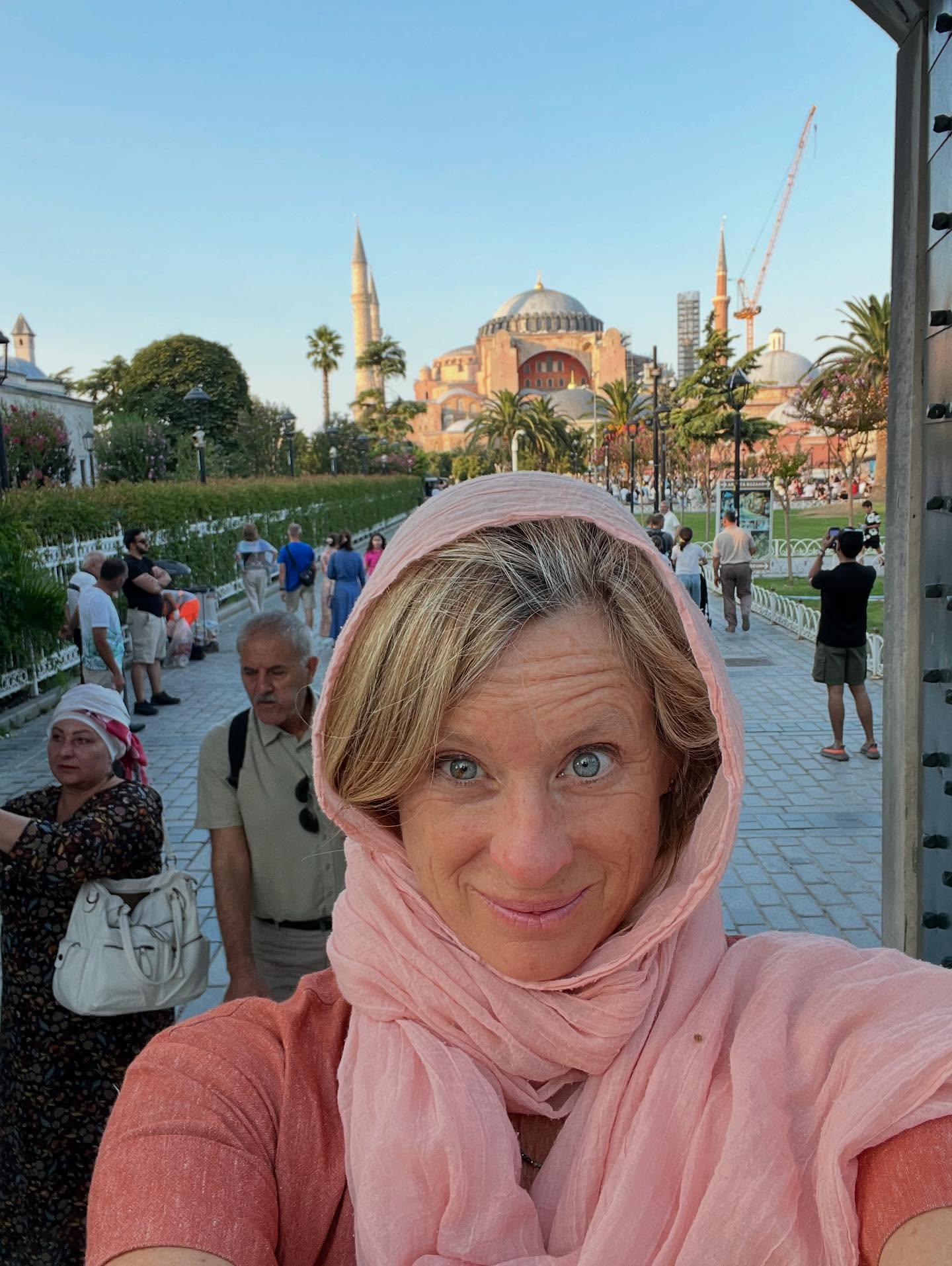
Lisa’s path has always been about revealing what usually stays hidden. Anthropology showed her that stepping outside one’s culture exposes assumptions we rarely question. Why do West Africans communicate in ways Americans and Europeans don’t expect? Why do the Kayapo of Brazil organize knowledge differently? How does griot rhythm completely rewire Western musical logic? These encounters reveal our blind spots—and expand what we think is possible.
Dharma practice does the same. Meditation makes the patterns running our lives more conscious. For Lisa, anthropology and Buddhism are complementary tools: both help us see clearly the cultural and personal forces shaping our experience.
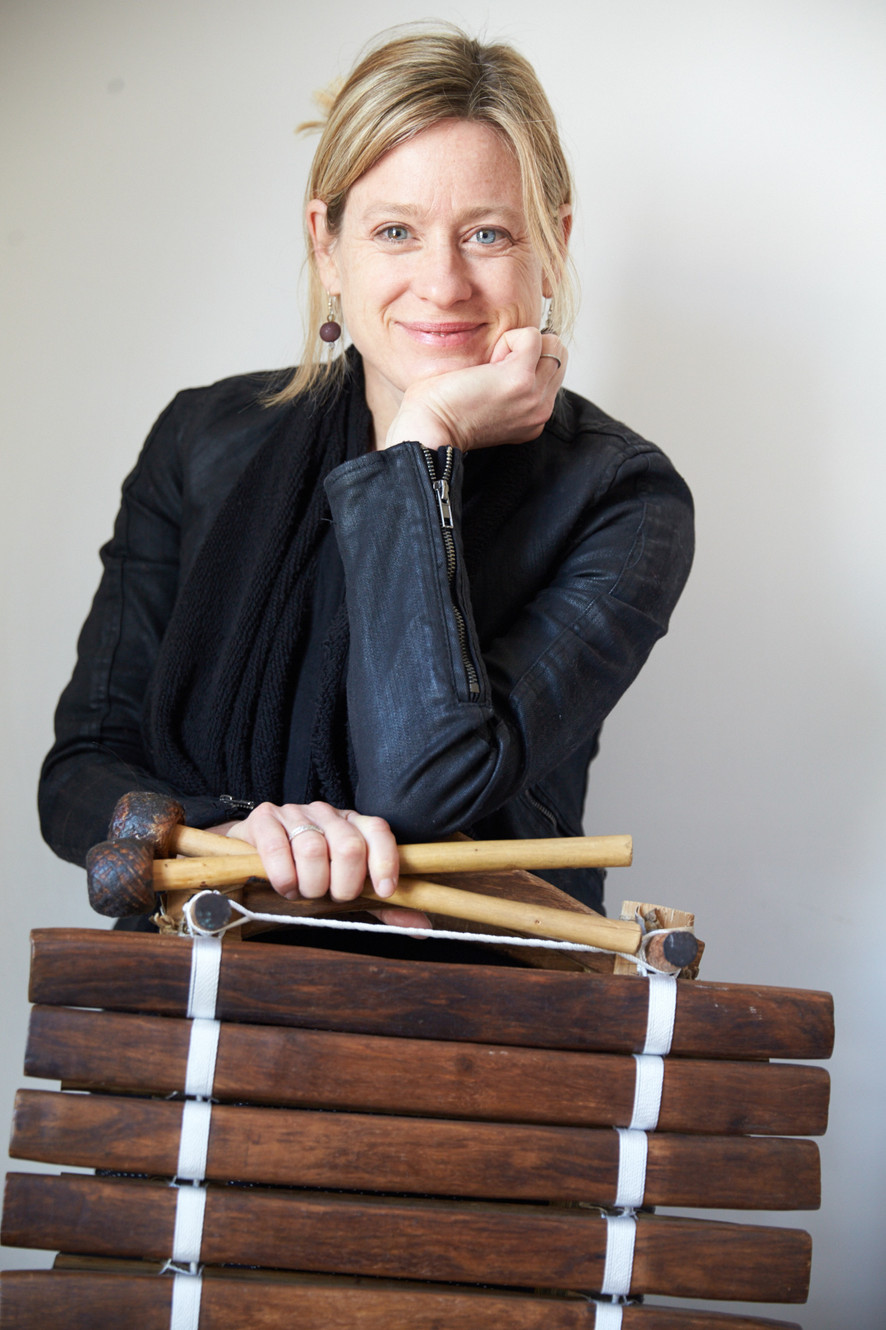
Lisa worked closely with the Kayapo people of Pará, Brazil until 2006 and has collaborated with West African griot musicians since 2000, studying balafon through an oral transmission tradition. The polyrhythms she learned are more than music—they’re a training in attention, perception, and community.
Since 2008, she has practiced Anapana Sati, Vipassana, and Vajrayana Buddhism in the Namgyal Rinpoche lineage, completing many silent retreats at Clear Sky Center and studying online with Planet Dharma. She now teaches with Dharma Europe and offers classes in Marseille, France. Her approach blends dharma with cross-cultural wisdom and lived experience.
Author & Anthropologist
The book also looks at the economic realities that shape cross-cultural exchange, and the challenges and gifts that arise when Western and West African worlds meet.